 Skip to content
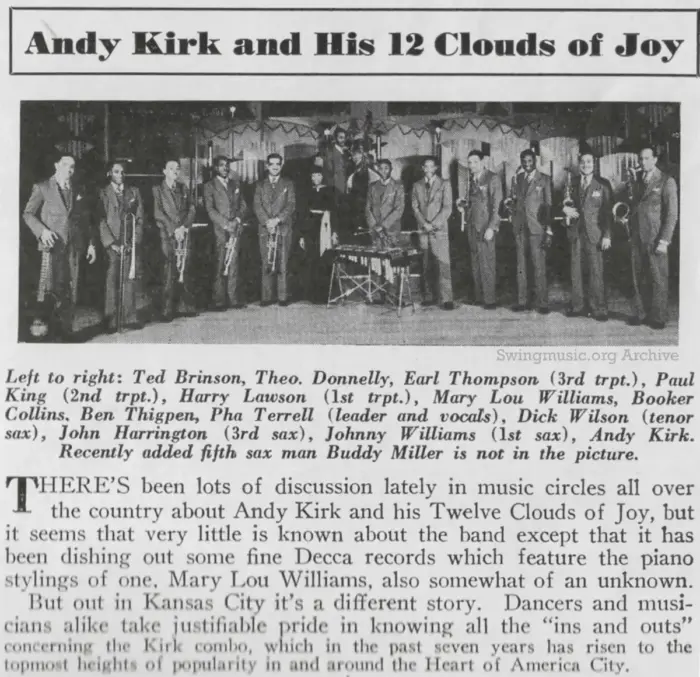
This historic jazz scan from 1937 captures the legendary Mary Lou Williams and Andy Kirk at the height of the Swing Era.
Text From This Scan Featuring Mary Lou Williams, Andy Kirk And His 12 Clouds Of Joy
Left to right: Ted Brinson, Theo. Donnelly, Earl Thompson (3rd trpt.), Paul King (2nd trpt.), Harry Lawson (1st trpt.), Mary Lou Williams, Booker Collins, Ben Thigpen, Pha Terrell (leader and vocals), Dick Wilson (tenor sax), John Harrington (3rd sax), Johnny Williams (1st sax), Andy Kirk.
Recently added fifth sax man Buddy Miller is not in the picture.
THERE’S been lots of discussion lately in music circles all over the country about Andy Kirk and his Twelve Clouds of Joy, but it seems that very little is known about the band except that it has been dishing out some fine Decca records which feature the piano stylings of one, Mary Lou Williams, also somewhat of an unknown. But out in Kansas City it’s a different story. Dancers and musicians alike take justifiable pride in knowing all the “ins and outs” concerning the Kirk combo, which in the past seven years has risen to the topmost heights of popularity in and around the Heart of America City.
Andy Kirk & His 12 Clouds of Joy (Metronome, Jan 1937)
By January 1937, Andy Kirk & His 12 Clouds of Joy were rising to the peak of their national fame. Specifically, they had transitioned from a “territory band” to a major swing era powerhouse.
Mary Lou Williams and Band Dynamics in 1937
The Powerhouse Behind the Throne: Mary Lou Williams served as the band’s “musical architect” as well as its primary pianist, composer, and arranger. In early 1937, she was a rarity in many regards, specifically as a female instrumentalist in a major big band. Additionally, she gained further recognition by writing arrangements for other legends, including Benny Goodman.
Commercial Success: The band had just come off their massive 1936 hit, “Until the Real Thing Comes Along.” This record featured the high-tenor vocals of Pha Terrell. Indeed, this song helped establish them as a top rival to other Kansas City giants like Count Basie.
Leadership Style: Andy Kirk was known as a “gentle man” who led with a relaxed hand. By 1937, he had largely stopped playing bass saxophone or tuba to focus on conducting the ensemble.
Recording Presence: Andy Kirk And His Twelve Clouds Of Joy was a major act for Decca Records. Between 1936 and 1937, they recorded dozens of sides that defined the “Kansas City Sound.” Simple, swinging riffs and blues-based structures characterized this style.
Notable Personnel (January 1937 Era)
Based on recordings and performances from this period, the lineup typically included:
- Piano/Arrangements: Mary Lou Williams
- Vocals: Pha Terrell
- Trumpets: Harry “Big Jim” Lawson, Earl Thompson, Paul King
- Reeds: Dick Wilson (a star tenor saxophonist), John Harrington, John Williams
- Trombone: Theodore “Ted” Donnelly
- Rhythm: Booker Collins (bass), Ben Thigpen (drums)
Metronome critics of the time celebrated the band for its “simple swinging riffs” and the “warm and relaxed rhythmic feeling” that made them stand out from more rigid, military-style big bands.
Hear Mary Lou Williams with Andy Kirk And His 12 Clouds Of Joy on the Swingmusic.org Big Band & Jazz Radio Stream. Explore more historic jazz musician information in the Swing Era Magazine Scan Archive.
