 Skip to content
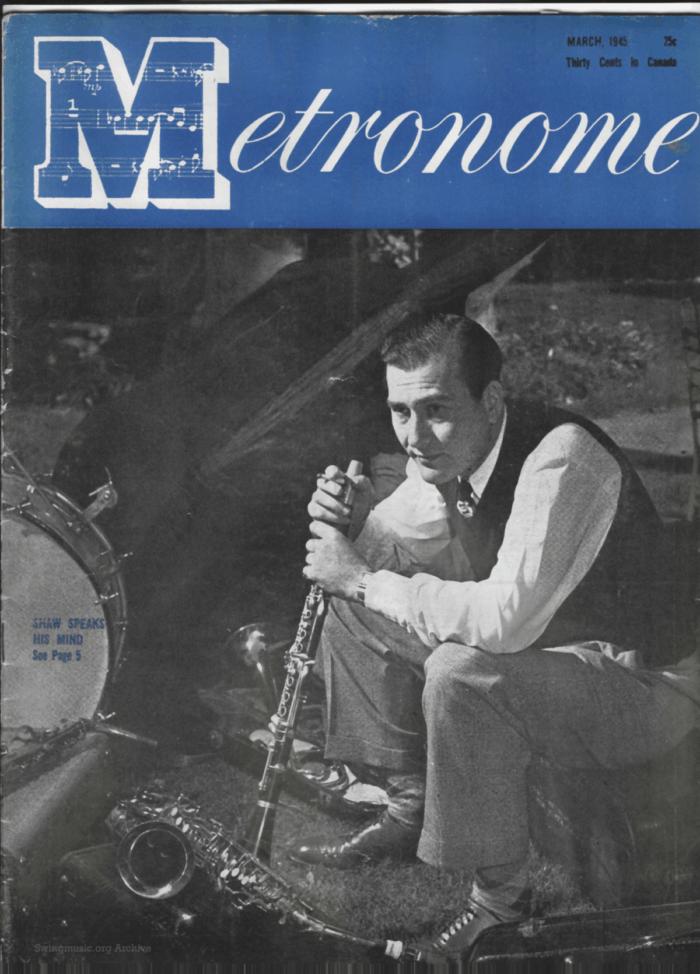
This Artie Shaw Metronome Magazine cover from March 1945 features the clarinetist during a pivotal transition back to civilian life.
Artie Shaw Post-War Career Developments
In March 1945, Artie Shaw was approximately one year into his return to civilian life. He had been honorably discharged from the U.S. Navy in March 1944. While in the Navy he led a service band in the Pacific theater for nearly two years.
By the time this Metronome cover was published, Shaw had organized a new touring orchestra. Unlike his famous 1940-1941 ensemble, this 1945 group did not feature a string section. It is often cited by historians for its modern jazz leanings. This band included notable sidemen such as trumpeter Roy Eldridge, pianist Dodo Marmarosa, and guitarist Barney Kessel.
During this specific month in 1945, Shaw was performing on the Kraft Music Hall radio program. He was also recording new material for RCA Victor, including several titles with a new version of his small group, the Gramercy Five. This period marked a transition in his career toward more complex, brass-oriented arrangements before he eventually disbanded this particular group in late 1945.
An Evolving Ensemble
A Shift in Sound: By the time this issue of Metronome Magazine was released, Shaw had organized his first post-war civilian band (formed in late 1944). Unlike his famous 1940s groups, this 1945 ensemble did not use a string section, focusing instead on a more modern, brass-heavy sound.
Legendary Sidemen: This period featured one of his most “jazz-forward” lineups. The band at this time included trumpet titan Roy Eldridge. It also included sidemen like pianist Dodo Marmarosa and guitarist Barney Kessel.
Mid-Forties Cultural Context
Peak Popularity: March 1945 was a busy month for Artie Shaw. At this time he was performing on popular radio programs like the Kraft Music Hall with Bing Crosby.
The Hollywood Lifestyle: Around the time of this cover, Shaw was living in a Tudor mansion in Beverly Hills. He was romantically involved with (and soon to marry) actress Ava Gardner.
Gramercy Five: He was also recording with a new iteration of his small group, the Gramercy Five, which produced hits like “The Grabtown Grapple” and “Scuttlebutt” during this 1944–1945 window.
Artie Shaw: The March 1945 Metronome Cover
Service Impact: Shaw’s return from duty wasn’t easy. He suffered from “combat fatigue” (now known as PTSD) and physical ailments. These including permanent hearing loss in one ear due to proximity to explosions while performing for troops in the Pacific.
Musical Restlessness: This cover captures Shaw at a moment of transition—he was physically back in the states but remained famously “musically restless.” He was already experimenting with the complex arrangements that would eventually lead him toward a different sound.
Legacy of the Artie Shaw Metronome Feature
The Artie Shaw Metronome March 1945 cover and feature is significant because it documents one of several moments when the swing era began shifting toward modern jazz. His 1945 band was short-lived. However, the recordings produced during this window remain some of the most technically accomplished of the decade. By preserving these primary source documents, Swingmusic.org Radio ensures that researchers have access to the original context of the big band era.
Hear Artie Shaw in a variety of settings including with Count Basie on the Swingmusic.org Big Band & Jazz Radio Stream. Explore our main Swing Era Magazine Archive Hub to see more historic Metronome and Downbeat jazz magazine articles.
