 Skip to content
Text From The 1940 Metronome All-Star Band Scan
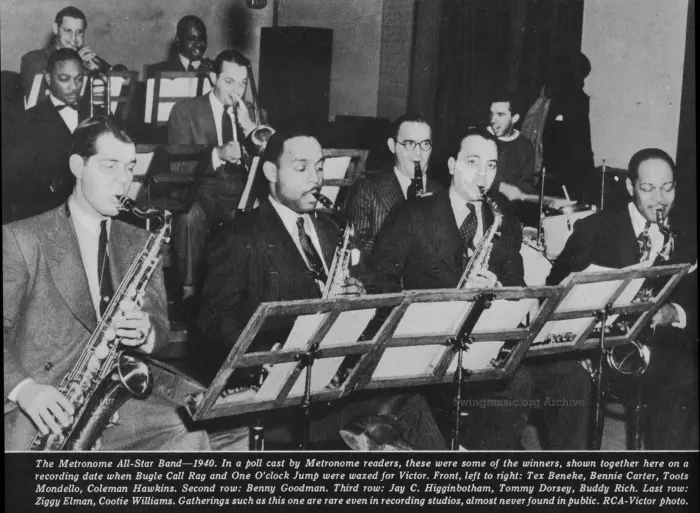
The Metronome All-Star Band-1940. In a poll cast by Metronome readers, these were some of the winners, shown together here on a recording date when Bugle Call Rag and One O’clock Jump were waxed for Victor. Front, left to right: Tex Beneke, Bennie Carter, Toots Mondello, Coleman Hawkins. Second row: Benny Goodman. Third row: Jay C. Higginbotham, Tommy Dorsey, Buddy Rich. Last row: Ziggy Elman, Cootie Williams. Gatherings such as this one are rare even in recording studios, almost never found in public. RCA-Victor photo.
The 1940 Metronome All-Star Band: A Swing Era Powerhouse
On January 16, 1941, the Metronome All-Star Band gathered for a legendary recording session. This group formed as winners of Metronome magazine’s annual readers’ poll in 1940. It brought the biggest names in swing music together for a single day at the RCA Victor studio in New York City.
The Heavy Hitters of the Recording Session
The band recorded two classic tracks: Bugle Call Rag and One O’Clock Jump. The lineup was a true powerhouse. In the reed section, we see Benny Goodman on clarinet and Bennie Carter on alto sax. Coleman Hawkins and Tex Beneke joined them on tenor sax. Furthermore, the brass featured Tommy Dorsey and J.C. Higginbotham. The trumpet section included Harry James, Ziggy Elman, and Cootie Williams.
Rhythm and Trumpet Battles
The rhythm section was just as heavy. It featured Count Basie on piano and Charlie Christian on guitar. Additionally, Buddy Rich drove the session on drums. One highlight is the trumpet “battle” in Bugle Call Rag. Fans still debate whether Harry James or Ziggy Elman “cut” the other during the exchange. This Metronome All-Star Band session captured a fabulous moment during the peak of the Big Band Era.
Hear these legends and more on the Swingmusic.org Big Band & Jazz Radio Stream. See more historic jazz musician images and articles in our Swing Era Magazine Scan Archive.
